There was a time when watching television meant being there when something aired. There was no pause button, no streaming library, and no episode waiting for you tomorrow. If you missed it, you missed it. VHS helped change that forever.
The story really begins in Japan during the 1970s. Engineers at JVC (Victor Company of Japan) were developing a videotape system that could bring video recording into ordinary homes. Professional magnetic videotape already existed, but the equipment was large, complicated, and expensive. The goal was to create something practical enough to sit underneath a family’s television.
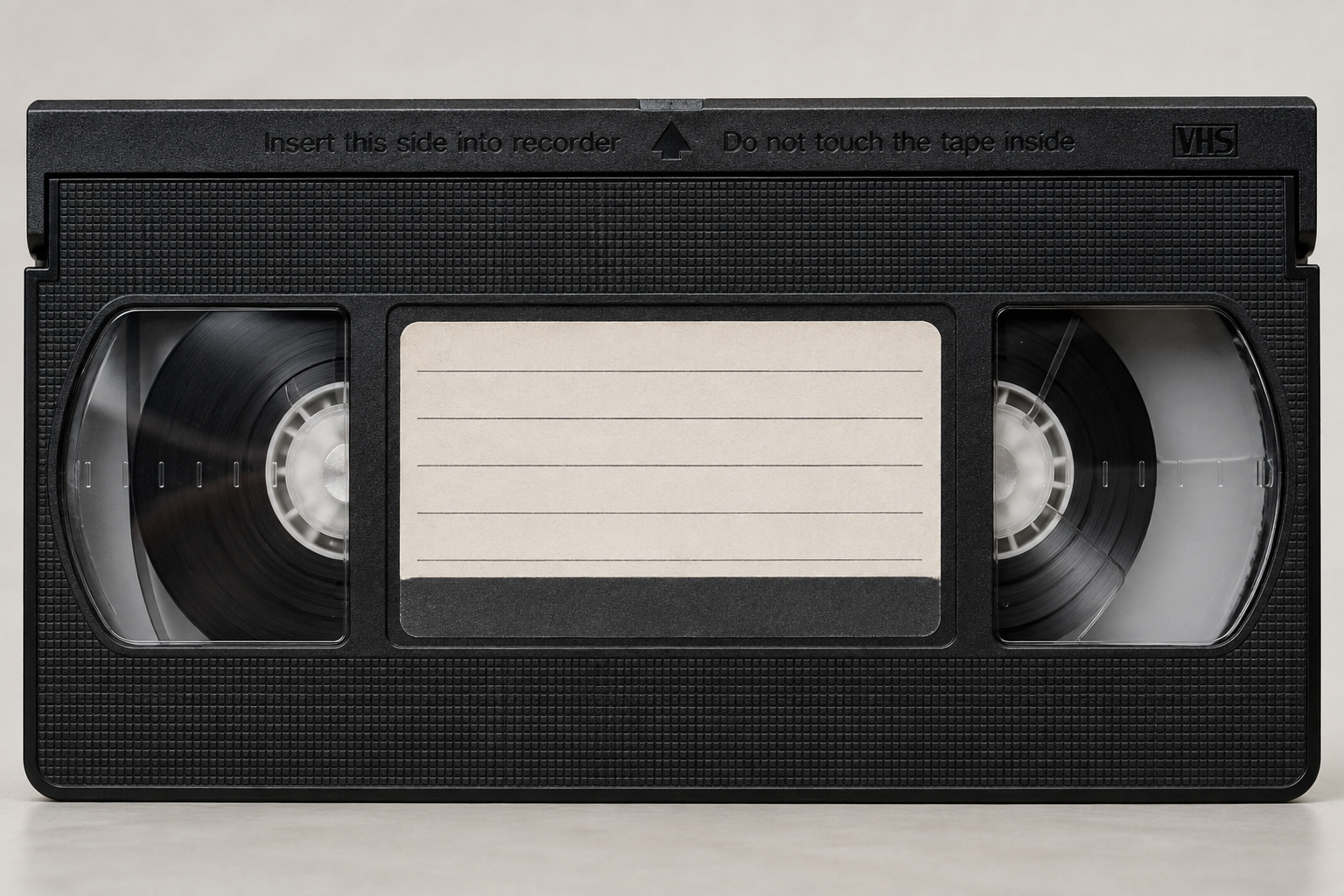
In 1976, JVC introduced VHS—Video Home System—in Japan. The system used magnetic tape stored safely inside a plastic cassette. Put that cassette into a VCR, press record, and television suddenly became something you could save.
But VHS wasn’t alone.
Sony had introduced its competing Betamax system the year before. What followed became one of the most famous technology battles in consumer electronics: VHS versus Betamax. Betamax had its strengths, including excellent picture quality, but VHS offered something extremely important to everyday consumers—longer recording times. Early VHS machines could record roughly two hours, enough to capture a movie or several television programs without changing tapes.
JVC also allowed other electronics manufacturers to produce VHS-compatible machines. Companies including Panasonic, Hitachi, Sharp, and others helped spread the format. Instead of VHS belonging to a single manufacturer, an entire ecosystem of compatible VCRs and tapes began appearing.
Then another industry exploded alongside it: video rental.
For the first time, you didn’t have to wait for a movie to return to television or the theater. You could walk into a video store, choose a tape from a wall covered in movie boxes, take it home, and watch it in your own living room. Eventually, millions of households built personal VHS collections of their own.
But prerecorded movies were only half of what made VHS important.
Blank tapes gave people control over television. Families could record shows while they were away, pause what they were doing and watch later, or keep broadcasts they thought were worth saving. The VCR helped create the idea of time-shifting—watching something on your schedule instead of the broadcaster’s.
Then came the home camcorder.
Suddenly VHS and related cassette formats weren’t simply carrying Hollywood movies. They were carrying people’s lives.
Birthdays. Christmas mornings. School plays. Vacations. Weddings. Babies taking their first steps. Someone’s father laughing behind the camera. Someone’s grandparents sitting in a living room that no longer exists.
That may be the most important part of the VHS story.
By the late 1990s and early 2000s, DVD began replacing VHS. DVDs were smaller, didn’t need rewinding, provided better picture quality, and weren’t subject to the same kind of magnetic-tape wear. Eventually Blu-ray, digital downloads, and streaming pushed physical videotape almost completely out of mainstream entertainment.
The machines disappeared from stores. Rental shops closed. VCR production dwindled. Boxes of tapes were moved into closets, garages, attics, and thrift stores.
And yet those tapes didn’t suddenly become meaningless.
In some ways, they became more important.
A commercially released VHS tape preserves a small piece of the way movies and television were once experienced. A recorded television tape might contain commercials, local news, station identification, or broadcasts that were never officially preserved. And a home movie may contain something far more valuable: the only surviving recording of a person, place, or moment in someone’s life.
That’s part of why DeadStock Media exists.
Old formats aren’t valuable simply because they’re old. They’re valuable because of what they carry. VHS gave an entire generation the ability to take something temporary—a television broadcast, a movie experience, a family moment—and make it physical.
Today we can fit thousands of videos onto a device smaller than a VHS cassette.
But there’s something worth remembering about that bulky plastic tape sitting on the shelf.
It was one of the technologies that taught us that a moment didn’t have to disappear just because it was over.